Showing posts with label advice. Show all posts

You Should Use Hirelings


It's dangerous to go alone, so don't. Bring hirelings, as many as you can afford.

Think about what you're actually doing when you explore a dungeon: Heading down into unknown territory where everything, the flora, fauna, architecture, and environment itself might easily kill you. At best you'll have incomplete information about what to expect. Vague rumors, outdated intel, and scraps of maps are the best you can hope for. Even if you've explored the place for a while and gained some familiarity with it there's no guarantee you actually know everything about the threats you're facing. Even familiar areas you've already explored can change unexpectedly and create new hazards. It's the Dungeon. You're in danger every second you're inside.

It's possible to go into the dungeon as a small party of just player characters and make it out mostly unscathed, but if you plan to make a habit or career out of delving it's safer and smarter to bring a larger group with you.

Serious delves are expeditions, major projects that take time, planning, and support. You're going into the dungeon and taking risks for a reason. You've got a goal and to achieve that goal you'll need help for the simple reason that the PCs can't do everything.

While PCs are (usually) very competent individuals they can't be experts in every discipline and specialized skill, which means you'll need to bring along professionals. Hire a carpenter to shore up the tunnels you'll be using regularly, build stairs to access (and retreat from) new areas safely, and winches to help move treasure out. Hire a scholar of local history and languages to decipher the carvings you found ("explosive gas ahead, no fire beyond this point", "this is not a place of honor") and translate for you with anyone/thing you meet. Hire a trained healer to actually treat your injuries instead of just slapping a bandage on your spurting wounds and hoping first aid will be enough. Sure you could try to do it all yourself, but it's so much safer to hire someone who knows what they're doing and has the proper tools on hand instead of your own fumbling attempts. You're taking enough risks already, spend a little gold and hire a pro.

And while the PCs are (usually) very tough individuals they're not superhuman. Surviving in the wild away from the support systems of civilization is a lot of work, surviving while on the move in a hostile environment like the dungeon is even more. The PCs don't have enough time or hands to attend to all the jobs themselves, which means you should bring more people along to help out. Hire men at arms to back you up in fights and have more people to stand watches so you actually get a chance to sleep and be well-rested. Hire torchbearers and scouts so you can see what danger you're facing ahead of time and have your hands free to deal with it when it arrives. Hire porters to carry your supplies and loot, make and strike camp, and transport the injured to safety. If you plan to be down a long time bring a cook too. There's safety in numbers and many hands make light work, so hire a support staff and let them support you.

Planning ahead and making preparations is how you avoid dying miserably in a hole. It's also how you get to a point where you can actually explore and interact with the dungeon instead of making quick desperate trips to scrounge for coins and whatever else you can fit in your pockets.

Once you have hirelings to help cover your basic survival, security, and logistics problems you can relax. A little. Enough that you can enjoy the beauty and mysteries of the dungeon. You can stop and take the time to actually look around and (with good lighting thanks to all your torchbearers) find secrets and valuables. You can delve longer (thanks to your men at arms' support and extra supplies with the porters), uncover things no one's seen before, and bring out more loot (porters MVPs). And you can prioritize what you take (with an expert on hand to appraise and ID items) instead of hauling everything back to town without knowing what it's worth, if it's cursed, or if it'll unleash an unspeakable evil.

Every hireling you add to your party takes a little more pressure off your PCs and lets you focus on being adventurers. They're also, to be indelicate, your spare bodies. When your PC dies mid-delve you traditionally take control of one of the hirelings as your next or interim character and in order to do that smoothly you'll need a lot of them around. It's always better to stagger back into town as a band of ragged survivors who can eventually stage a rescue and recovery mission than it is to just disappear, lost forever beneath the earth, and become another cautionary tale for the local kids about why you don't go poking around in dungeons.


Judging A Book By Its Cover


I love stories. Reading has been a major part of my life for as long as I can remember and in that time I've honed my methods for finding new things to read, with sophisticated strategies like:

Read everything the library has, then ILL titles and visit other libraries when they run out. Worked great as a kid, but not so much as an adult with limited free time.

Read the classics. The famous, seminal works of each genre that everyone agrees are excellent and make it onto the mainstream must-read lists. There's a reason those titles get roped into the cultural canon, but the list of classics is finite. Most of those authors are dead. They won't be writing more and one day I'll run out. They're also only a tiny fraction of what's out there.

Collect recommendations from friends and folks I know have similar tastes. My friends have excellent taste and haven't steered me wrong yet, but sometimes I want to read trash.

And recently I've added another technique to the rotation. What I've been doing more and more lately is choosing books based on pure aesthetics, literally judging them by their covers. It's worked like a charm.

When I'm looking at shelves of books, usually in a used bookstore but also in libraries, I scan over the titles and apply this criteria:


1 Cover: Is cheesy vintage art. The hand-painted oils that we know and love old pulps for.

2 Spine text: Is a dated typeface, custom font with unique graphic flourishes and bits (maybe even a graphic itself, the fancy title text from the cover taken off and resized to fit the spine), or is the bare bones sans-serif small caps of standardized mass market pulp from the 60s to 80s. (No matter what the font is, the spine itself should be bent and worn. a spine without any signs of wear is a red flag.)

*The order of 1 and 2 are interchangeable depending on how the books are displayed on the shelves and which is visible first.

3 Title: The cornier the better. I love a sincere yet ultra-dramatic, overwrought, and ultimately goofy title. A terse no-frills title that pulls on core pulp imagery like 'The Sword and the [X]' is good too.

4 Blurb: Read the synopsis and hook paragraph in the front matter to see how it presents itself and if the premise is interesting.

5 Text sample: Open to a random page and read a bit to evaluate the writing quality, because sometimes it really is bad.

6 Price: Unless it's desperately intriguing and exciting, has to be $5 or less.

7 Smell: If there's even a hint of mildew/old book stank it goes back on the shelf. (Mildew can spread to other books and doesn't belong in my collection.)


If a book clears all seven stages it comes home with me. I'll also check if it's part of a series and grab any of the other books that are there too.

Now there's a caveat. I'm specifically looking for old obscure fantasy, sci-fi, weird fiction, and horror. This method works for that because it's scanning for the quirks of the publishing industry's style and trade dress used in those genres during that time period. It's incredible for finding mass-market paperbacks from that segment but gets less effective if you move to other genres and eras.

It's been invaluable in helping me scour shelves and find things I've enjoyed reading that I'd never have found through the regular channels of book recommendations and discovery.

There are so many books that are good and have just fallen out of the public eye over time. Ones that aren't considered sci-fi/fantasy classics, don't make people's must-read lists, and are fading from the cultural consciousness as the decades pass and new titles eclipse them. It doesn't matter how popular a book was when it was originally published if it's been out of print for over 30 years, and that's the situation of most of the books I find.

They're out of print, no one's talked about them in literal decades, and the medium of a mass market paperback is too delicate to survive that long circulating in a library's collection. The only way I'd realistically have a chance of encountering them is by stumbling across a used copy in a bookstore. This criteria gives me a way to do that smoothly and sift through shelves fast to find and grab these books before they fully evaporate into obscurity.

Give it a try. Go to bookstores, library book sales, estate and garage sales, anywhere with a random mix of old books en masse and search. Don't spurn $1 book/clearance/last chance carts and tables either. You're looking for the cheesy pulp that everyone missed was gold. See what you find.


No Bad Rolls


There's no such thing as a bad roll. Every time you throw the dice, no matter what value turns up, that's a good roll.

Common game wisdom is that you don't roll to determine an outcome if you're not ready to accept the result. If something in the game matters to you enough that you're not willing to leave it to random chance, then you don't roll and you handle it in a different way instead. So if you're rolling at all it's because you already decided that whatever outcome you get will be okay. Ideal? No. Exactly what you hoped? No. But it'll be something you can play around and have fun with.

You can't win an RPG. The point of an RPG is to play the game, and the reward for playing is that you get to keep playing and having fun. Every roll you make moves the game along, doesn't matter if it's a success or a failure. Every roll gives you something to react to and continue from, that's the point of the game. No matter what happened as a result of the roll the game goes on and you get to keep playing, so it was a good roll.

Where good or bad comes in is in how you react to rolls. And here good or bad doesn't mean high number-low number/succeed-fail, it means fun or boring.

When you roll, run with it. Whatever the result is, own it and play it out. Either crash headlong into consequences or adapt and find another way to do what you wanted, but play.

If the result's not what you were hoping for stop and think about what's possible instead of immediately going "oh no." Sure you might be disappointed, but don't let that overshadow the reason you're there: To play the game and have fun. The only "oh no" at the table should be an expression of gleeful horror at what's about to happen.

Having only what you want to happen happen isn't the game. If you need that much control over events to enjoy yourself, then maybe playing a collaborative semi-randomized imagination game isn't for you.

Reacting to what does happen in that shared creative space is the game. So accept your good rolls, play, and have fun.


Read the Dictionary


Go read the dictionary. I'm not kidding. Go pick up a dictionary and read it. Treat it as a book in its own right, not just a reference, and go from A to Z. Pay attention and actually absorb the information in it. Do it today, right now even. It's good for you.

Whether you're a writer, reader, or just someone who speaks the language reading the dictionary for its own sake is worth it. It gives you a chance to encounter new words, collect them, and build your vocabulary. Every word you know, each atomized fragment of language you absorb, gives you a greater understanding and appreciation of the language as a whole. Revel in them.

As a speaker you can express yourself more completely and easily. As a reader you get more enjoyment from your reading because you can pick up and understand more of the nuance in what's written. As a writer you have more tools.

I've talked before about how a writer's most important skill is their ability to choose the right word for a job. Your words are your tools. As a writer you have to be able to convey your meaning precisely, using words that carry the right feel and nuance. That match the spirit of what you want to say, not just the basic concept. You can get by with a small assortment of basic words, a limited palette, plenty of people do. Some actually make it work, but more often it produces flat lifeless writing. You need variety to write something that has weight and juice and life. There are words for everything you want to say, but to use them you have to know them first. You need enough words so that when you have to choose which to deploy you can choose right every single time.

You get that by seeking and collecting and hoarding words until you have a dauntingly massive vocabulary to select your tools from. The larger your vocab the more options you have and, if you're learning and appreciating the words as you collect them, the better you understand how and when to use them. The goal is always to learn and absorb as many words as possible for the mental storehouse, and you do that by going to where the words live and reading the dictionary.

Do it. Trust me, you'll love it. Words are fun.

Go find a really big one, a hefty desk reference copy with plenty of space to spare for unusual and obscure words that might not make it into a more portable version. And an old one, one with a binding that's falling apart and includes the disused archaic terms that may be dropped from newer editions. Grab several. Thesauruses too. And if you can find a good combination dictionary-thesaurus, get it. Cherish it. Keep it forever.

I make a point to pick up a dictionary and at least read a section every few months for a refresher and it truly does help. Every time I come across a word I like but haven't used in a while it's like running into an old friend. So go read the dictionary. Really. Your brain and your craft will thank you.


Write It

I spend a lot of time online talking about RPGs and something I hear regularly is that someone will have an idea for a project they want to make, but they aren't doing it because there's something similar that already exists. For example, wanting to make a game about mechs but holding off because Lancer's already out there. And no, that's not how this works. Knock it off.

If you've got an idea for something you want to write, then write it.

It doesn't matter if there's already another game in the same genre or that uses similar themes, make yours. Seriously, stop and think: Can you imagine this happening in any other art form? No movie studio is going to pass on making a spy flick just because there are already James Bond films. Painters don't look at waterlilies and think "Nah, Monet already did it." That's nonsense. Write the thing you want to write. Whether it's a system, an adventure, something small like a blog post or list, just write it and don't worry.

RPGs are a new and wide-open medium. There's plenty of room for everyone to create their own art. Do it. Don't stifle your creativity because you're worried about stepping on toes or that it'd be a waste of time or that you're not good enough to write compared to others. Make your thing and have fun doing it.

It doesn't matter if you're not the best, you don't need to be and you'll only improve as you practice. It doesn't matter if what you make isn't a success, in making it you've developed your skills and honed your taste by seeing what wasn't up to your standards. More importantly, if you enjoyed making the thing then your time wasn't wasted, even if you decide it's a failure in the end. Creativity is worthwhile in itself, not just a means to an end.

It especially doesn't matter if there are similar games out there already. Having multiple interpretations of the same subjects and concepts by different artists is a vital part of art. Having more options and examples of things to read, play, and experience makes the medium richer. It's a good thing. Your work might even inspire others in their turn. Also a good thing.

So stop worrying, take your idea, and write it already.

Coins In the Dungeon


As an adventurer you're almost always going to have coins on you. Lots of coins. Whether you just got them from the dungeon you're exploring or brought them in yourself doesn't really matter, they're there.

Most of the time coins are treated as a burden. A valuable burden, but still just a weight to carry around that slows you down, takes up space, and alerts enemies by clinking at inopportune times. It's not entirely wrong. Coins are heavy, they do take effort to haul, and unless you find someone to trade with or bribe in the dungeon they're useless as currency until you bring them up to the surface and into town.

But they're not completely useless.

Treating them only as cargo ignores the fact that coins are physical objects with useful properties beyond their monetary value. (We forget that about real-world money too.) Coins are uniformly-sized and shaped pieces of metal that you can use for all kinds of jobs in the dungeon.

For example, you can take your coins and:

- Throw them down halls and into rooms as a distraction or to check if anything is lurking out of sight. It's the classic 'make a noise that the guards will investigate' ploy and it works. If you make a noise and something reacts, you know to be careful. Throwing coins in an opponent's face is also an effective distraction.

- Throw them ahead of you to check for traps. A single coin might set off a trap with a hair trigger and you can throw a sack full to test heavier weights. It'll also let you test for chemical hazards. If you throw a silver or copper piece in a room and it instantly starts tarnishing/patinating you can tell it's probably not smart to go in (without the right PPE). And if a gold coin starts reacting, then just run.

- Mark your path. Stick them in cracks in the walls, between floor stones, on ledges, anywhere they'll be visible and catch light. It'll give you a trail of reflective blazes that are easier to pick out in torch or lantern light than chalk marks for when you backtrack. Coin trails are good for navigation, temporary in case you want to be stealthy, and if they're gone when you come back at least you know someone's been there.

- Set them out as bait. Wait patiently and find out exactly who's following you.

- Use them as tools. Coins make great improvised screwdrivers, wrenches, and drifts. You can also use them to pry up the edges of stones, grills, grates, decorative facings, access panels, anything you want to break into.

- Use them as shims and jams. You can level or stabilize equipment and items on uneven surfaces by slipping coins under the unsupported parts until it's got a solid base. Tuck a short rolled stack of them into a door's strike box to keep it from latching if it closes. Shove coins into cracks like an old fashioned jammed cam/stop to hold ropes and climbing gear in place. (A bag of coins might actually be better than a traditional block cam because it's flexible but will seize up if you put force on it.)

- Use them as weights. A heavy pile or sack of coins makes an excellent anchor or counterweight, and of course they're good for holding down pressure plates, buttons, triggers, levers, and switches. You can accurately control the amount of weight you use too since coins are small units of mass and similar sizes.

- Test distances. You could drop a coin down a hole and listen for when it hits the bottom, but it's smarter to tie a pouch full to the end of a rope and use it as a plumb. That also works for measuring water depths. A weighted rope is really just a useful thing to have in general.

- Make a weighted rope. Coins on the end of a rope let you accurately throw it across gaps/chasms, up into trees or to ledges/areas above you, over water, wherever you need it to go without having to tie a heavy knot that takes up a portion of the rope's length. And if you tie the coins-on-a-rope to the end of your 10' pole you can swing them and (with some finesse) reach and interact with things outside the normal 10' range.

- Take advantage of their conductivity to close circuits and activate electric or magic-powered devices. Might short-circuit or explode, but it's probably fine.

- Shape them into whatever you need. Gold, silver, and copper are all relatively soft and ductile metals. You can treat coins as boullion/metal stock and cut, grind, hammer, or cast them into simple tools and shapes as needed. It might take a while and it might look rough, but you can do it. And yes, I did say cast. Gold, silver, and copper all have melting points within the range of what a stoked and tended wood fire can produce. (Au 1948F, Ag 1763F, Cu 1984F and a properly handled fire can make ~2000F.) It'd take work and planning to do, but it's possible.

- Roll them and throw them like bricks or use them as brass knuckles. You should be rolling your coins anyway. It makes them compact so they're easier to pack and carry, and keeps them from clinking.

- Use them as ammunition. Slings, slingshots, crossbows, and blunderbusses don't really care what goes in them. Coins are dense. They might tumble in the air, but you can practice and learn to compensate for it.

- Stick them in a sock and hit stuff with it. An improvised cosh is the best kind of cosh and terrible for enemy morale.

In the dungeon everything you have is a tool and everything can be repurposed, even your loot. Especially your loot. Your wealth is worth absolutely nothing if you die in a hole, so don't be too attached to it. Be creative and use everything at your disposal to survive.


Torches vs Lanterns


Light is your most important resource in the dungeon after breathable air. There are lots of light sources you can bring on a delve, but the most common and traditional choices are torches or lanterns. Which has spawned decades of discussion about which is better. This isn't more of that.

Most arguments about light sources focus on efficiency, doing the math about which gives the most light/longest burn time compared to how much space it takes up and weight it adds to your gear.* They focus on packing as light as possible so you have room for the loot you hope to bring back, but prioritizing the space-effectiveness of items over their actual usefulness and applications misses the point of choosing equipment. You pick the things that'll help keep you alive. Sacrificing an inventory slot or two in order to carry more useful gear is a smart choice.**

So instead of choosing between torches or a lantern bring both. Use both. Keep both on hand so you have the flexibility to use each in the situations they're best suited for. It's worth the extra weight to be able to adapt to whatever weird thing you run into.

And once you have them both, be smart about when to use each. Take the time to think about your equipment and how you can use each piece to your advantage. Not only the obvious intended uses, but also the different unintended ways it could help if you improvise. That goes for all equipment, not just light sources.

Here's what I think about when it comes to lanterns and torches. These aren't pros/cons lists, they're just the properties of each item to consider when deciding how to approach a situation.

Lanterns:
- Can be set down, hung, and left unattended without going out. Hands-free.
- Aren't extinguished by wind, random gusts, or rain.
- Have a shielded flame so they won't accidentally set things on fire, but makes it harder to intentionally set things on fire.
- Can be shuttered and concealed easily.
- Fragile(ish). They might work with broken glass, but rely on having an intact fuel tank.
- Can use the fuel for other purposes (as oil, accelerant, solvent, for tick removal, etc) but can accidentally spill it.
- More expensive. They're reusable but cost more to replace.
- Can be disassembled and cannibalized for glass, metal, and wire.

Torches:
- Can't be set down without going out. Need to be put in a sconce, stand, or specifically propped up.
- Put out by air currents and splashes.
- Can't be concealed easily and have to be put out completely to hide.
- Smoky. Makes for bad air quality but the smoke can be used as a tool.
- An unshielded flame. Easy to set things on fire, but it's just as easy to accidentally set your things and self alight too.
- Durable, because it's a stick. Can also be used for stick things and as a source of wood.
- Cheap as hell, utterly disposable. You can throw them ahead of you and drop them down holes without a second thought.
- Floats. Again, stick.

So if you want to sneak around and hide at a moment's notice? Go into rough weather? Use both hands freely? Light up your lantern.

Want to detect air currents? Hit something? Light an area or check for explosive gas without having to go in? Keep your options open for an impromptu arson? Pull out a torch.

Dungeon crawling is basically critical thinking and problem solving as a career, so lean into it. Don't worry about packing efficiently or how much you're carrying, bring the tools that will work best even if they're more expensive (in capacity or money) because they'll help you more than an empty space in your pack.

* If you're curious, here's the light per slot napkin math:
Torches last 1 hour and can be bundled. So at 6 torches/bundle it's 6 hours of light per slot.
Lanterns burn for 6 hours on 1 pint of fuel. A waterskin holds 4 pints of liquid and takes up 1 slot, so that's 24 hours of light. The lantern itself takes up a slot, so it actually works out to 12 hours of light/slot and gets slightly better if you carry more skins of fuel. A jug holds a gallon of liquid (8 pints), so if you use those to store your fuel you can double the waterskin numbers.

** As an adventurer your job is to explore, fight, and get everyone back home safely. If there's loot to carry you can help haul some, but most of the schlepping should be left to hired porters while you focus on keeping everyone safe. If there's enough treasure that your porters can't take it all at once, then don't. Leave some behind and come back later with more porters. It's okay to make two trips.

Food in Games


When I run games I make a point to describe the food the party eats and what they have available, even if it's only rations. It's a little extra effort, but it's worth it. Taking the time to describe what the characters eat changes meals from simple resource management into something memorable and fun. It helps build a sense of place and make the game world feel richer.

Cuisine is a major cornerstone of every culture. Making a point to describe the particulars of the local cuisine and regional specialties gives each place the party travels a different character. Instead of a string of nearly identical villages you get differentiating details like "that town on the coast that made those dried sardines soaked in chili oil" or "the village with the orchards that made peach wine." Even if nothing particularly adventurous or exciting happened there the players remember it, the characters go back to stock up on favorite snacks, and it becomes a thing.

It also helps emphasize distances and scale while the party's traveling. Places that are close to each other share basic cooking styles and as you go farther afield you start encountering new and different foods. Running into these new types of food does more to make the players feel like their characters have moved through space and gone somewhere else than just knowing 'you've been on the road for a month' does.

The availability and variety of food on offer in a place also builds the local identity. How many places to eat does a village/town/city have? There may not be any restaurants in a small village and you end up eating a meal in someone's home. There might be an inn that's the town's only eatery and doubles as the town hall for gatherings every other week, or it could be one of several establishments. The larger a city is the more choices you have. The more chances there are for fancy restaurants, multiple types of cuisine on offer, niche little cafes and clubs, street food, and a whole gourmet scene. And all of it shares information about the people who live there.

A variety of options also makes the party's decision of where to stay and what to eat actually mean something instead of just being another tickmark on a downtime activities list.

Here's how I do it:

1 Decide what the area's main cooking style is.
I look at the environment and what ingredients would be available in the ecosystem, then pick a cuisine that would fit. Or if an area's already similar to a real-world place, I just pick that.

Ex: A coastal fishing village in the north gets New England-style cooking because it's close and I'm familiar enough with it to improvise.

2 Decide a few regional and local twists to the overall style.
I think about what notable features the local area has, then choose a few ingredients that could come from there.

Ex: The village is surrounded by pine forest so they have an abundant supply of bolete and chanterelle mushrooms, edible ferns, and juniper that gets worked into their dishes.

3 Think about seasonal ingredients.
Having all sorts of fresh food available at all times of the year is a modern thing. I think about how crops and wild plants grow; how animals reproduce, migrate, and hibernate, and what that means for what's available throughout the year. Fresh food, especially fruit and produce, have a narrow window and the rest of the year you'll have it canned, dried, salted, or otherwise preserved.

Ex: Corn is harvested in the late summer and early fall, salmon run in the fall, mushrooms sprout in the fall and spring.

4 Consider preservation methods.
Every style of preservation has the same goal: to prevent bacteria, fungi, and critters from getting to the food and spoiling it. The different methods reflect what resources are available to the people doing the preservation. If you're by the sea, salting is convenient. In the forest with plenty of wood? You probably prefer smoking. Somewhere with reliable strong, direct sunlight? That makes drying easy. There are more expensive and labor-intensive methods like canning, candying, pickling, and fermentation that rely on having equipment like airtight glass or expensive sugar. I pick a few that make sense for the area and think about how they could be incorporated into the dishes.

5 Bring it together into a menu.
Once I know the basics from 1 to 4 I can start improvising dishes. I usually ad lib them when the party stops to eat. It's not difficult to do it on the fly because I've already decided the edible framework. All I need to do is pick a combination that sounds tasty.

Ex: The party's in that coastal fishing village next to a pine forest. There's a large swamp and marsh nearby and the village has cleared a little land for fields. The main culinary style is New England. Local specialties come from the forest, swamp, and sea.

Spring - Fried fiddlehead ferns and mushrooms, a filet of whitefish with cranberry preserves, and beer.

Summer - Roast sweet corn, turtle soup, frybread with caramelized onions, and blueberry tea. Strawberry rhubarb pie for dessert.

Fall - Maple-walnut cornbread, crab chowder, fried clams, roast squash with molasses, and birch beer.

Winter - Smoked wild turkey, roasted root vegetables, barley porridge with apple chunks and chestnuts, and cider. Apple pie for dessert.


Everything comes from the surrounding environment, is in season or a preserved holdover from the previous year, and is in tune with the local cuisine. I just need a moment to think about the land, how things grow through the year, and where the food comes from.

6 Consider where the food's served.
My players usually don't find themselves in refined establishments. They're more likely to visit a tavern, get street food, or cook over a campfire. I still think about what types of restaurants might be around and decide the number and styles of cooking based on the size of the city. More people in an area means more options. It applies to places outside of cities too. If there's a busy road I'll put a few chuckwagons and food trucks along the way, and a little diner or two at natural waystops. If there's a fair or market I'll add a row of food stalls. And you bet there'll be roadside stands selling fresh produce in farm country. Good food is everywhere.

If my players went to a restaurant in a bigger city that had an entirely different culinary style from the rest of the area I'd improvise dishes in that style. If they went to a fancy joint that served the region's main cuisine I'd keep the basics I've already established but flex a little. Throw in ingredients that would be rare, expensive, or imported; use more labor-intensive and obscure preparation methods, and have a lot more courses. The aim is to make the meal feel different from what they're used to.

A nine-course meal in the area might be something like this:

A gin aperitif and candied chestnuts.
Lobster bisque.
Oysters.
Wild greens salad with candied walnuts, dried blueberries, blue cheese, and cranberry vinaigrette.
Lemon-pepper cod served with grilled asparagus.
Roast swan with pomegranate and mushroom stuffing.
Peppermint-cucumber sorbet.
Blueberry pie with plum and dark chocolate ice cream.
Maple-glazed eclairs, peach tart, baklava, a peach brandy digestif, and coffee.

All courses served with white wines except the main which is accompanied by a red.

The meal uses mostly local ingredients with a few unusual things and dishes incorporated, and is different enough from what the party regularly eats that it registers as something new.

Note: I'd never make my players sit through me describing an entire full-course meal like boxed text. If they asked I'd lay it out in one go, but otherwise it'd be mentioned as a backdrop to something else occurring at the fancy dinner/party with me describing a new dish as it's brought out, then going back to what they're doing.

7 If they're cooking for themselves.
My players cook about as often a they buy prepared meals, maybe a little more. For that I think about what's actually in a "ration" and use those ingredients to decide what meal gets made over the fire. Rations aren't bricks of nutrient paste, they're preserved foods packed for travel. If you buy them locally then they'll be made with the locally available foods and ingredients.

I also give the party chances to forage to supplement their rations. Whatever they find gets incorporated into the meal (or preserved) and they decide if they want to use it to stretch their rations and conserve resources or if they want to get some benefit from having had a more interesting meal with bigger portions.

Give it a try. You're already doing worldbuilding as a GM, take a few minutes to think about food when you do. It's fun!

Making Traps Fun


Traps are a dungeon crawling staple and honestly, usually not very fun. Your classic traps like poison needles, spikes, swinging blades, and pits are iconic but serve a very specific purpose of forcing the party to be cautious as the explore. They deal damage and your reward for foiling them is that you're not maimed or dead.

That's boring.

Pain is fleeting and uninteresting. Obstacles are engaging. Instead of just doing damage traps should change the game by altering how the players can interact with an area. They should do something beyond grinding the party down.

When you write traps try creating ones that:

  • Have a reward beyond survival. If you manage to not die you can find bits of loot and interesting things left by or on previous victims, or the parts of the trap itself might be useful (or valuable).
  • Add structural interest to the dungeon. Let traps act as new paths or access points for secret areas once they're tripped. (Ex: Pit traps that have an access door at the bottom for cleaning crews to enter. Deadfall traps that have something behind them in the space where the "fall" material came from. Arrow slits and murder holes that you can see through once you find and deactivate them.)
  • Move the party unexpectedly to another section of the dungeon. Elevator rooms that drop you down levels, stairs that turn into chutes and slides, and walls that drop to split the party are classic examples. These introduce the same "will we have enough resources?" tension as a damage-dealing trap, but are more interesting because they create a new situation instead of just pain.
  • Can be reset and used against enemies or have an interesting effect the party can play with. (Ex: Gravity tricks with a magic fall-up pit trap.)
  • Confine but don't injure the person who trips them. (Ex: Falling cages or barred gates over doorways.) The party's unharmed but now they have a new problem to solve.
  • Sound alarms (either audible and obvious or silent) and alert the dungeon inhabitants to the party's presence.
  • Are clearly telegraphed as dangerous, but exactly what they do is unclear so the party goes "What the hell is that?" and has a chance to figure it out.
  • Have bizarre effects like teleporting victims away or forcibly astral projecting them. Something that's just part of the dungeon's tech and is only dangerous because the party's not trained to use it.

There's so much potential for adventuring shenanigans with unorthodox traps. Embrace it. Make them entertaining to interact with and figure out. Make them cause unexpected, unpredictable, immediate problems to deal with beyond massive bodily trauma. (Unless you're Luke Gearing, then keep doing what you're doing. That hallway is beautiful.) Have fun.


Alectile Dysfunction


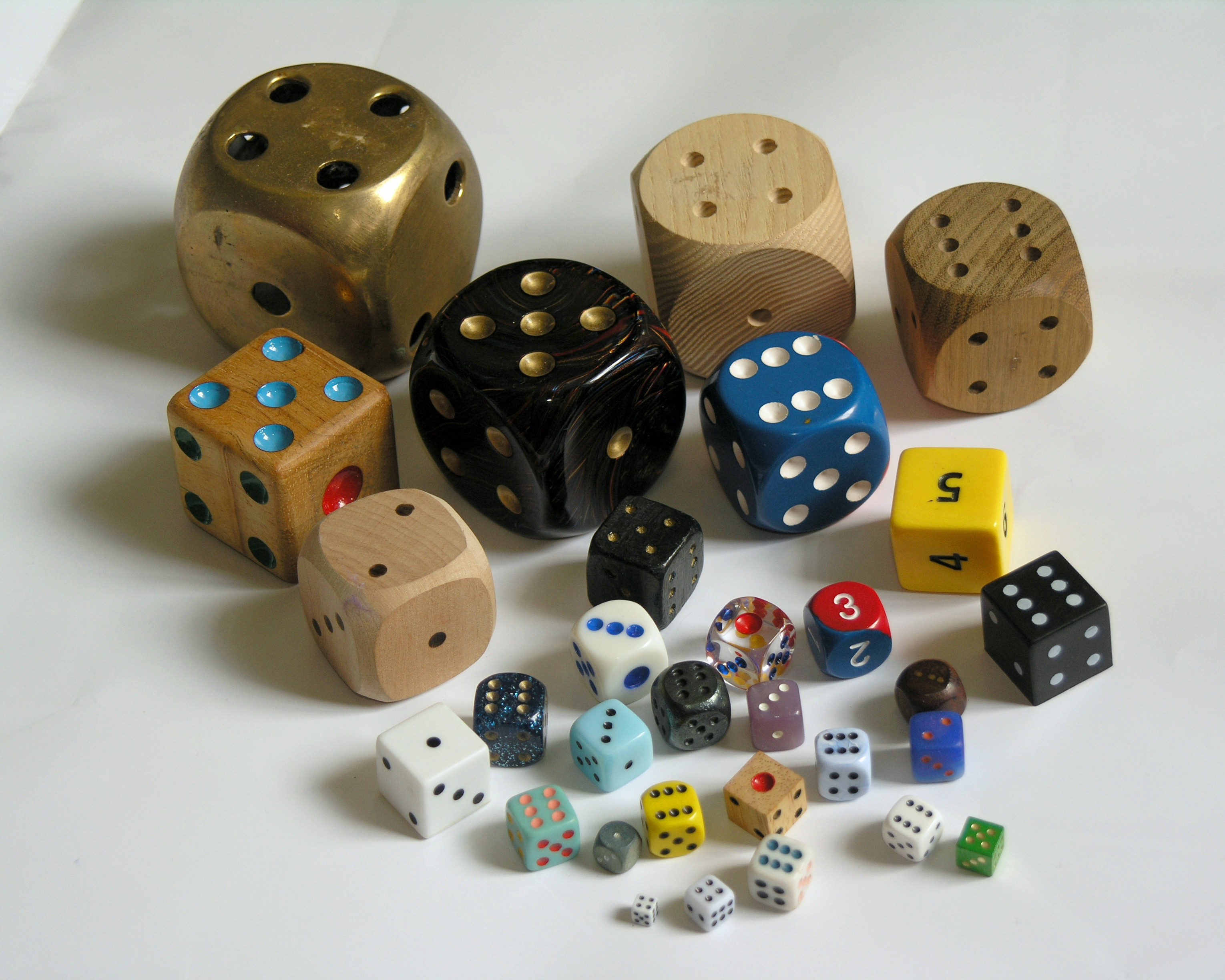
Sometimes you try to roll a die and it just falls onto the table with a disappointing flop. Sometimes you get too eager and it goes shooting off the table and gets lost on the floor. Don't worry, it happens to a lot of people. But if it's happening often enough that it causes problems in your gaming there are a few things you can try to make your rolls more reliable.

Note: "Problems" means wasting time looking for lost dice on the floor or having to ask "should I reroll that?" It doesn't mean cheating and has nothing to do with the actual numbers you roll. This is about the physics of rolling dice and getting you back to playing the game. It's also about you. If someone else at your table is flinging dice around to the point that it impacts everyone's enjoyment of the game, talk to them about it.

The goal of rolling is to get a randomized number by having the die tumble several times before it comes to rest. There are a few variables involved in that:
  • The shape of the die. A die's center of gravity changes with its shape. More ball-shaped sizes (d12, 20, 30) take less force to roll than pointier dice with pronounced edges (d4, 6, 8).
  • The surface it's rolled on. There needs to be enough friction between the die and the rolling surface that the die's edges catch and it tumbles instead of just sliding along.
  • The space it's rolled in. There needs to be enough of an open area that the die can roll and tumble a few times before it hits an obstacle.
  • The force used to roll.
  • The angle of the throw. A die thrown at a low angle to the table will travel farther than one thrown from a high angle.
If you have the right mix, the physics work in your favor and you get a nice, satisfying roll. If any of the variables are too far off, you run into problems. Start troubleshooting your dice rolling by thinking about your:

1 Force used

This is the simplest one. Are you throwing the dice hard enough? Too hard? Think about the times you've had an issue with the dice and try to see if there's a pattern. (Do pointier shapes flop more often? Try rolling those harder. Do rounder shapes go flying? Ease up on those.) Go get your dice and roll a bit, refresh your memory. It might be as simple as building a new muscle memory of how to throw each die shape. You might also just need to chill and stop chucking the d20 across the room.

2 Throw angle

You probably don't think about it, but what angle are you throwing your dice at? It does make a difference. The angle a die hits the table at determines the path it'll roll. A low-angle throw will travel farther along the table than a high-angle one and high-angle throws are more likely to bounce. Paying attention to the angle you throw at lets you predict how it'll behave.

Rolls off the table are more likely when you have a low angle and a lot of force. Flops are more common when you have a high angle and not much force. Slides happen when you have a low angle throw with force on a smooth surface, because there's not enough friction to make the die actually roll.

Try changing the angle of your throw. It's another facet of building new muscle memory and may help.

3 The space

Is your table cluttered? Be honest. If it's crowded on the table, organize it enough that you've got an open space to roll in. You don't have to clear it off completely, just make an open area that everyone can reach to roll in and make sure it stays clear. Aim for a 1' x 2' clear space and see if having that obstacle-free zone helps.

4 Rolling surface

If the table you play on is smooth, try putting something over it. Test roll on a tablecloth, piece of construction paper, sheet of craft felt, maybe even a carpet sample square. Anything with a rougher surface texture than your usual rolling surface. See if it makes a difference in how much the die tumbles and if it stops before falling off the edge of the table.


Try those changes individually and in combinations. If you still don't see an improvement in your rolls you might want to try some gaming equipment:


Dice trays

These provide a guaranteed clear space to roll in with walls to keep your dice from flying around. The walls also create a backstop for the dice to bounce off of and randomize more. I'd suggest getting a tray with a rougher inner surface like velour, felt, or suede leather so your rolls won't slide.

Dice cups

These are great for playing when there's not much room. Use the cup to shake the dice, then turn it over and reveal them like in Liar's Dice. It reduces the area needed to roll to a spot the size of the cup's mouth and randomizing by shaking inside the cup eliminates problems with the force and angle of throws. I'd suggest getting one made of leather or that has thick padding on the inside to cut down on noise while shaking since plastic can be loud.

A shot glass

Hear me out, it works. Get a shot glass. You want one wide enough that a d20 can sit in the bottom and not touch the sides. To roll this way just drop your die in the glass, it'll bounce around the inside and randomize just as well as it would with a good roll on the table. It also works with a lowball/old fashioned glass. The key is to have a glass surface for the plastic die to ricochet off. The drawback with this method is you can't roll multiple dice at once. The upside is it's ultra-compact and only takes up a shot glass worth of table space.

Dice towers

There are lots of styles, but the core principle is you drop a die in at the top and it randomizes by bouncing through a series of baffles inside the tower before rolling out at the bottom. It does all the work of rolling for you and conserves table space by using a vertical axis to reduce your rolling area to the footprint of the tower.


They're all good choices and there are plenty of styles available if you want to try them. Like anything else: Expensive doesn't mean better, look for good craftsmanship and quality materials, and consider how you'll store the thing once you've got it. (I try to look for equipment that disassembles or folds flat for easy transport and storage.)

Hopefully some of these suggestions will be useful and help you cut down on chaotic rolls so you can spend your game time playing, not hunting for lost dice. Give them a shot and see how it goes. Good luck!


Making Magic Items


Creating new magic items is easy. Would one of your players like something specific for their character? Do you just want to make something new and fun? Go for it. Magic items are an exercise in creativity more than anything else. Ignore balance and write something cool. (Seriously, don't waste time worrying about whether an item will be overpowered or game-breaking. That's not actually an issue and if you do run into a problem, talk to your friends and sort it out like adults.)

Magic items all have three basic parts: What it is, what it does, and a name.

What it is

The physical description of the item. The materials, quality and workmanship, design, decorative features, and what type of object it is (a hat, weapon, scepter, etc).

There are endless options here. Literally. The only limit on what form an item takes is your imagination.

A few considerations while writing:
  • Do you want it to be flashy and ostentatious or misleadingly mundane-looking? Some magic items obviously look magic, ornate and impressive in a form of arcane aposematism, but simple enchanted items are a staple of folklore and fairy tales. A worn cloak, old boots, a simple wooden staff, or bone flute; things that don't look impressive but are powerful nonetheless.
  • Do you want it to be thematically appropriate? Since the item can be made of any material and crafted in any shape, do you want it to have symbolic references to what it does worked into the design? Puns or ironic references too. Shoes of Waterwalking that are cement clogs would be hilarious and you know it.
  • Do you want form to be related to function? What the item is doesn't have to reflect what it does at all. This is related to how much symbolism is in an item, but more prosaic. It's the choice between earrings that let you eavesdrop, a drinking glass that does the same thing when its mouth is pressed to a solid surface, or a silk shirt with a gaudy ear pattern that lets you hear better. They all technically do the same thing, and all have related symbolism, but are each increasingly removed from the actual ears they augment. This is magic, form doesn't have to follow function if you don't want it to.

The description is the most important of the three parts because it's what makes the item memorable. With the description to bring it to life it's a magical item of power. Without that description to highlight it in the player's minds it's just another line on the character sheet and might as well be a feat instead of a distinct object existing on its own.

What it does

The item's power and anything special it grants the user. Also curses.

Magic items have traditionally been a form of horizontal character advancement and growth. A way for characters to gain abilities that are unrelated to their classes, like a feat but transferable to whoever holds the item (unless it's cursed). Also a way for characters to get better at what they already do of course, but the weird abilities are more fun.

Some considerations:
  • How strong is it? Is this the magical equivalent of a disposable lighter, useful in several small ways but mostly a convenience, or is it a significant and extremely potent object? This isn't a question of whether the item is overpowered, it's the decision of where it lies along the spectrum of "trinket" to "reality-ending folly."
  • Are there any requirements or consequences to using it? You might want to make it consumable or only usable at certain times or under specific conditions. Maybe there's a terrible side effect or cumulative cost. If you add restrictions do it in a way that enhances the flavor of the item. That makes it feel more like a real, organic creation than if you only try to constrain it out of fear that it's OP.
  • How closely does it interact with the rules of the game? Do you want the item to do something directly related to the rules like giving bonuses to rolls or extra attacks in combat, or do you want its powers to be more freeform and able to be used creatively. Where does it fall on the scale from a +1 sword (rule-affecting) to spiderclimb boots (freeform)?

A name

A distinctive name is almost as important as a good description. You want the magic item to be special and stand out from the character's mundane equipment, and a name that sparks the players' imaginations will do that. Your players don't need to know the name as soon as they find the item, but you should know it and they should find out eventually.

Some considerations:
  • How much do you want the name to reveal about the item? You could choose a descriptive name like the classic [Item] of [Effect] formula that reveals its function or be more circumspect. Give a name that describes the physical properties of the item or is an oblique reference to what it does. What are Moonsilk Gloves? Who knows! Your players will want to find out though. (They let the wearer phase their hands through solid objects and are invisible except under moonlight. You don't want to meet the spiders the silk comes from or the witches who knit it.)
  • How much does the name reveal about the game's world? Names referring to an item's place of origin, past owners, and notable events they were involved in (ex: dragonslaying) reveal as much about the setting as they do about the item itself.
  • How much do you want to reference real-world mythology? Including items from or inspired by mythology is an RPG staple, but think carefully about how common you make them and how you present them. Are they the literal tools and gifts of the gods lying around in the mortal realm? Is it just a name that a mortal creator bestowed on the item because they were feeling inspired? A coincidence? There are plenty of ways to work mythology in. (I like the idea of an Excalibur that has nothing to do with kingship and whose only special ability is that it always cuts cheese into exactly equal portions.)

That's all there is to making magic items. Be creative, write something you think would be fun, and run with it. I believe in you.


Matrix Rolling

I've said that rolling stats is an important part of character creation, but the actual process of rolling takes time. Not a lot, but in a high-lethality game where you're regularly making new characters (often mid-session) the time spent rolling stats can become a bottleneck.

I use matrix rolling to avoid that delay.

Normally when creating a character you roll 3d6 or 4d6 six times and move on. With matrix rolling you roll 36 times and place the values in a 6x6 grid (aka a matrix).

This gives you 12 possible stat lines to choose from, 6 vertical and 6 horizontal. Whenever you make a character, pick one of the 12 lines and cross it off. Then, when that character meets their horrible end, go back to the grid and pick one of the remaining lines to use in making your next character.

It takes a little extra time to generate the matrix when you start, but it's worth it to be able to jump back into the game faster after being dispatched messily.

This is what a "roll X in order" matrix looks like:


The inner square (blue) is the pattern to fill the grid in; starting in the upper left and going down, wrapping around to the top of each column until you reach the bottom right. The outer numbers (red) are each of your possible stat lines, and the stat names for keeping track of "in order."

Here's an example of how it plays out. I rolled this grid:


Looking at what I got, I'd start by picking the third horizontal row. Cross that line off and make a beefy fighter, Gerald.


After Gerald's tragic demise (eaten by a grue) I decided to play someone brainier who won't bumble alone into the dark, so I grab the sixth vertical row for my new wizard.

(The last 14 is used by both lines. That's fine. Crossing a line off means you can't use that complete set of 6 numbers again. You can still use the individual numbers where different lines intersect.)

And so it goes until all 12 of your pre-rolled stat lines have been used, then you generate another grid's worth. (And wonder why your game is so incredibly lethal. Maybe it's you.)


Troika! Background-Writing Tips


A while ago on the MAC discord server I shared a list of the things I try to do when writing backgrounds for Troika!. I'm posting it again here in case it might be useful to someone and so it's not lost in the scroll of channels.

The best advice on writing backgrounds comes from page 2 of the core rules: "Balance the enjoyment rather than the numbers."

The most important thing is to try and make something that's fun to play as. Something that will spark a player's imagination and inspire ideas about who this person they've rolled is.

Keeping that in mind, here are the rules of thumb that I try to follow when writing backgrounds:

1 Focus on a specific flavor and write only as much as it takes to convey that flavor.
2 Don't repeat information, unless you specifically want to make the repetition a joke or an important detail.
3 Imply information more than you actually write details.
4 When you do give details make them interesting and something that readers wouldn't automatically assume. (ex: An immortal hero background would obviously have a legendary weapon, so don't list their sword in their possessions. Instead list a battered photo album of their past companions.)
5 Don't go overboard with possessions and skills, only give the key elements of the flavor.
6 Only give a special ability if it's vital to enhancing the flavor.
7 Keep the background open enough that it can apply to multiple sequential characters. It's a background for a group/profession of people, not an individual.


How to Roll a d4

d4s need more love. They're delightful, solid dice and the best way to generate probabilities in 25% intervals. Yet they seem to be everyone's least favorite dice for two main reasons:

1) They're stabby,

This is a feature, not a bug.

2) They don't roll well.

I won't deny it. The d4's combo of acutely-angled edges and a low center of gravity prevents it from tumbling nicely when thrown in a normal roll, so you end up with that disappointing flop-slide we're all familiar with. The way to avoid that is to modify how you throw them.

A traditional dice roll is a low-angle throw that relies on the die's momentum and friction with the table surface to make it tumble and randomize. Works great for d6s and the rounder dice like d12s and d30s, but not for the elegantly stable shape of the d4. Instead of relying on a roll across the table, you need to make them bounce and tumble to get randomized before they hit the table.

You can do that by using a dice cup or tower, but the easiest way to do it is just shake the dice in your cupped hands to get some randomization, then throw them in an arc up instead of the normal straight-line toss. Your goal is to have the dice tumble in the air, then hit the table at as close to a 90 degree angle as possible so they bounce. You could even just drop them if you did a thorough shake first.

It works great. Try it. Do a few practice throws right now.

See? It's satisfying.

Now go and have fun with your d4s. Teach others what you've learned and maybe one day we'll live in a world where the d4 is only criticized for being stabby. (Because they are and always will be.)


Etiquette For In-Person Games

When I started playing RPGs, games were in-person events. The tools and resources for playing online in real time didn't exist yet, so everyone got together at someone's house and played. (If you were lucky enough to have other players living nearby.) I don't miss those days. Voice and video chat, virtual tabletops, and the ability to find other players from all around the world are absolutely improvements on how it used to be.

Online games are a different experience from in-person though. Not better, different. With different sets of logistical complications to deal with in order to run a smooth session.

The availability of online groups combined with pandemic conditions and the world being what it is means there's a proportion of players who've never actually played in person before. And for those who have, pandemic conditions may have made you rusty. Since folks are starting to gather and play in person again (which I think is unwise) here are a few things to keep in mind to help you be a considerate player and friend in meatspace.

(Most of this is basic etiquette and common sense you probably already know. It would apply to any social situation just as well.

This is also advice about managing to exist together in physical proximity, not about playing the game. The basics of playing (taking turns, respecting x-cards/lines and veils/boundaries, making sure everyone's having fun, etc.) don't change and are even more important in person than when playing online. Don't be a jerk. If someone around you is being a jerk, stop them.)


Commitments, scheduling, and communication:

Scheduling multiple adults to do something together is a feat. Scheduling them to do it in person on a regular basis is a miracle. If you're invited to a meatspace game be sure you can actually commit to show up, especially if there wouldn't be enough people to play without you. Everyone understands that things happen and real life takes priority over games; but if you're going to regularly miss sessions let the rest of the group know so they can bring in more players to have a reliable group size or bow out.

Also, if you join a game and realize you're not enjoying playing, bow out. You can always come back for a different game later, don't force yourself to play if you're not feeling it. Your time is valuable too.

Be on time. You don't need to be perfectly punctual, but try to arrive within 15 minutes of the planned time and let the group know if you're running late. It's fine if you're late, things happen, just make sure to communicate with your group so they don't worry about you. They're your friends, they'll worry.

If you have to cancel or reschedule give as much advance warning as you can. Let your folks know what's going on and don't feel bad about asking for a schedule change if you need one, just try to give the rest of your group as much time to plan as possible.

TL;DR: To play in person folks have to travel, spend money on fuel and transportation, haul stuff around, and get back home. It's more of an effort to organize and more of an inconvenience to change plans unexpectedly, so be considerate. Respect your friends' time and communicate as much as you can if plans change.


Table manners:

There's a finite amount of room when you're playing in person. Be aware of how much table space you're using and try to make sure no one is too crowded. Try to bring as little stuff as possible, only what you'll actually use, and if you're not actively using something don't keep it on the table. Put it by your chair or against the wall where you can grab it if you need it, but it's not taking up table space.

Be proactive about messes. Watch your drink, watch other people's drinks. Watch your snacks, crumbs, and greasy fingers. Clean the table thoroughly before you set up for game, especially if you all ate there first. We all know how expensive these books are, and how many of them are out of print and literally irreplaceable. Do everything you can to not destroy your friends' stuff. The easiest way to do that is just to pay attention and think ahead. Watch your elbows. Keep drinks away from things a spill would damage. Use coasters. Consider what could go wrong and be ready to respond to other folks' messes too. Have a roll of paper towels on or near the table at all times, I'm not kidding.

Try not to distract from the game. No one is going to be completely focused on the game for the entire session and it would be unreasonable to expect that; but don't hand your phone across the table to share a meme while folks are in the middle of something. Wait for a lull or a break. If you're going to use electronics at the table, wear headphones or make sure your devices are muted. Online it's not a big deal, but in person it can make it very hard for folks who have trouble focusing to enjoy the game. Do your best to help make sure your friends have fun.

TL;DR: Make an effort to be self-aware and look out for your friends.


You got this. Be excellent to each other and have fun!

What is O5R?

A while back I was talking about how I like 5e, but run it in an O5R way, and was asked "What's O5R?" Turns out that's a perfectly reasonable question because, despite running all my 5e games in the style, I had a hard time pinning down an actual set of rules/rulings and changes that make an O5R game different from vanilla 5e.

I've given it more thought and come up with an answer.

O5R isn't a distinct system, and it's not 5e that's been houseruled into something unrecognizable. It's 5e mechanics lightly molded and paired with the DM style and decisions to create an old-school feel at the table.


So what does that actually look like? The first, most important differences are:

1) Ignore balance.


Challenges don't scale to the PCs' abilities. There are real dangers confronting them and no guarantee that an encounter will be level appropriate. Your players should have to learn to judge if a situation is too dangerous for them, and if it is, to run away.

You should still at least check a creature's CR to see how dangerous it is, but don't treat it as the deciding factor in whether to use a monster or not.


2) Cut out all the standard D&D/WotC lore.


Keep the D&D IP creatures if you want (I love owlbears and rust monsters), but the setting lore gets pitched. No Faerun, no Sword Coast, no Underdark, etc. Can you have an ocean with pirates? Of course! A winding subterranean realm underlying nearly the entire world filled with unspeakable monsters? I'd be disappointed if you didn't! Just make them your pirates and your lightless underground hellscape.

Don't include things just because The Lore says they exist, and don't hesitate to bring out the gonzo. Throw true weirdness into the mix for your setting, give it some wondrous and bizarre style.

(The corollary to this is you have to explain it to your players clearly. Present them with the important setting details so they can make meaningful choices based on the conditions in the world you've made. Do this before the game starts, at session 0 at the very least, to give them plenty of time to ask questions and understand.)


3) Don't let the PCs start bogged down by a lot of backstory. 


Starting characters should be mostly formless. A basic personality and a handful of details like hometown, family business or previous profession, and a like, dislike, or goal is plenty. Let the rest emerge through play and the characters develop instead of coming to the table as an established entity with a specific build in mind.

(Do make sure your players have their characters take a background in the game mechanic sense though. That's a sizable chunk of their abilities. They can reflavor the backgrounds however they like.)


After you've done that, address the more mechanical aspects:

A) Good plans don't roll. 


If players do something clever or come up with an unorthodox plan that might work, reward them. They've done a good job. Their plan works without needing to roll for it. At the very least it should give them a partial success, positioning them to succeed later or to have an advantage in their current situation.


B) Move the focus away from combat.


This ties into ignoring balance because combat is more dangerous now and usually the worst option in a situation. Give players ways to solve their problems beyond "sword." A good way to do it is to put the focus on exploration. Have the PCs go out into the unknown and face obstacles that they literally can't fight. Rockfalls, deep chasms or cliffs, weather, crumbling structures, etc. Present them with things they need to work through or find ways around instead of a band of goblins that'll only slow them down for a few minutes.

There will still be some combat, but you don't need to change any rules or tweak death save mechanics to make it more lethal. You just need to make enemies smart. Have them use tactics, teamwork, have goals to achieve beyond plain slaughter, use the environment to their advantage, and care about their own lives. Sometimes the PCs have to retreat to survive, sometimes it'll be the enemies who cut and run; but it'll only take a few encounters with competent, coordinated enemies to teach your players that combat's not the default reaction and should be avoided if possible.


C) Homebrew! 


Throw your own stuff into the mix, but don't alter the player-facing mechanics. Instead of trying to lop off sections of the system or make radical changes to basic rules, have your homebrew material add to the existing game.

Pay attention to what the players are interested in and create spells and items that play on that. What you make doesn't have to be powerful, just interesting. For example, when my players fought and slew a bus-sized magically mutated scorpion they asked if they could harvest the chitin to make armor. Of course, they could! (I'm so proud of them.) They took some, dragged it back to town, and found someone to work it into gear. The finished armor had the same stats as a breastplate plus a little magic resistance. Not an exceptionally powerful magical item, but better than what they had and cool to them because of the origin.

Same goes for rules. Listen to what the players want to do and find a way to make it happen. The same group of players found several statues and wanted to try auctioning them off, hoping to get more money than they would with a direct sale. So I made auction rules that leave the exact amount of profit up to luck and keeps the party engaged in a mini game.

Whatever you decide to add, be sure it makes the game more fun and the world more wondrous instead of just harsher.


That's mostly it. Also for consideration is:

- Non-standard treasures and loot. Go beyond coins, gems, and magic items. Give out rare plants, harvested monster parts, spell components, and just generally bizarre artifacts that are maybe valuable, maybe powerful, but definitely intriguing.

- Magic is weird. Represent magic as the distortion of reality and entropic strain on time that it is. Encourage players to reskin the existing D&D spells to better suit their characters. Create new ones. Make it abberant and unsettling.

- Characters are beloved, but expendable. Make sure your players know their choices have consequences and you won't shield their characters. Also, let them retire their characters and make new ones if they want.


TL;DR O5R relies mostly on the DM's choices and flexibility to step away from vanilla 5e. They need to put in the thought and effort to apply basic old school concepts in how they run the game and make a world that's both engrossing and incredibly dangerous.

Writing Coherent Session Notes


Who here takes bad notes?

It's okay. It's not like taking unclear notes (or none at all) is unusual. It's a shame because accurate, detailed notes are an invaluable tool for tabletop. They're vital for games that happen rarely (say, on a monthly schedule) or for DMs to keep track of what happened several sessions back. (Because how often do your planning notes reflect what actually happened?)

Getting in the habit of taking useful notes is absolutely worth the effort involved. Here's what I do when creating my notes as a player and as a DM:


1) Do everything in hardcopy


I use a legal pad or spiral notebook and rollerball pen. (Uniball Eye, UB-157. All the colors are good, but light blue is my favorite.) A liquid ink lets you write quickly/smoothly to avoid hand cramps; and writing on paper lets you arrange notes, extra details, and addendums wherever you want on the page. Ink also forces you to move on and not try to correct spelling/detail errors in the moment. At best you can cross out the incorrect data and rewrite. It keeps you moving, which is important. It also cuts out electronic distractions at the table.


2) Work in multiple drafts


For really useful notes you'll have at least two drafts. Sometimes three. It's important to keep in mind because knowing that you're not creating a final draft frees you from worrying about style. It doesn't matter if the first draft is ugly, and that lets you record information fast while still focusing on playing and enjoying the game.

Here's how the drafts break down:

First draft - This gets written during the game and will be recopied. It's disposable, so don't worry about how it looks. Your only concern should be recording all the relevant data of who did what and making sure your handwriting will be legible to you later.

When I'm writing my first drafts I only use one side of each page and number the pages. It uses more paper, but it also ensures I can lay the pages out and see everything I've written at once. That way I don't miss anything later when I'm recopying it for my second draft. (Try to recycle the paper from first drafts and get your office supplies from thrift shops/garage sales. It helps to reduce waste and save money.)

The relevant info to record is mostly names and actions. Locations and setting details are important, but you can ask your DM for clarification about them later (or consult your notes if you're the DM). Remembering who did what in a situation is more fluid and difficult to recapture once the moment is passed, so it's what you need to focus on. Make sure every action has a name attached to it. Use abbreviations and write fast. You're recording all this data in real time.


Second draft - This is where you copy and refine your collected info. Do it as soon after the game as you can, so the memory is still clear, and take your time. For most people this will be the final draft, so style is important. You need to be able to look back and say "yep, that's what happened", not "I know I wrote that down, where is it?"

I use hardcopy for my second draft too. Basically the same format of 8.5" x 11.75" legal pad (for uniformity when storing) and ink, written on only one side of the page and numbered.

This is where you fix spelling errors, add descriptions, and flesh out details (of items, NPCs, locations, etc) that there wasn't time for during the initial recording. Now that you have time you can also spell words in their entirety, so replace your abbreviations with the actual words and full names.

One of the major things I do in my second drafts is condense combats. Instead of listing each round of a fight I pare it down to general actions: Group tactics, kills, spells, dire injuries. The big stuff. Exact damage dealt at any one point isn't important and it's assumed that party members will be making attacks. It's not necessary to write "Character X attacked! Character Y attacked! Character Z attacked!" when you can shorten it to "Characters X, Y, and Z ganged up on the goblins and beat them to paste." The shortened, more narrative version is usually more fun to read too.

Another thing to consider when writing your second draft is the balance between technical writing and creative writing in your notes. The technical part is important for clarity and ease of referencing. (You know, the reason you're writing the document at all.) You're not writing a novel, so long passages and paragraphs of description are out, but that doesn't mean your notes have to be dry after-action reports. This is a record of your campaign, and even if you're the only one who will ever read them, throw a little creative writing in to commemorate the fun you had. It's entirely possible to make an outline of events entertaining through word choice and bombasticity.


Third draft - This isn't really necessary if you're happy with your second draft, but I have two types of third draft that I make depending on my role in the game.

If I'm the DM, I use my second draft notes to refer to while planning and at the table for a few sessions. When I have enough (usually 7 sessions worth) I recopy them into a composition notebook for long-term storage and give the second draft notes to my players. The composition notebook serves as a campaign bible with the final versions of all my planning and session notes. (In my current campaign we're at 28 sessions and I've filled 1.5 notebooks.)

If I'm a player, I type up my second draft notes and share them with the other players and DM. Because I'm nice. I usually only do this if it's a long time between sessions and it's really necessary, like for the monthly game I'm in. For weekly games folks are on their own.


3) Record the important info

Earlier I mentioned that names and actions are the most important things to catch, and that's true, but you should still try your best to write down everything you can. I rely on abbreviations and basic stenography to speed my writing up. If you want to learn shorthand, awesome. Proud of you. If not, the basic tricks that will help are:

  • Shorten names. Write a character/place/spell name out fully the first time you encounter it, then use the first initial or a short combo every time after. (Ex: Magic missile = MM)
  • Use abbreviations for common words (Ex: dmg, not damage) and choose the shortest words possible that will still capture the situation. You can improve your word choice later when you're copying the second draft.
  • Fill margins. If new info comes to light or you missed a detail, cram it into the margins or between lines. Any empty space is good. If you want, treat it like a footnote and give it a symbol (like an asterisk or double cross) to link it to related info.
  • Ignore errors in grammar, style, and spelling. Your first draft will be sloppy and ugly, that's fine.
  • Don't edit. If something you wrote is factually wrong, just cross it out and move on. Don't try to erase it or spend time correcting it, you'll fall behind and miss something. Just put the correct info wherever it'll fit.


4) Have consistent organization


Presenting info in a way that it can be accessed and absorbed efficiently is just as important as having the info at all. You're going to end up with lots of notes and want to be able to reference them fast, so it's important to decide on an organization method and stick with it. When I write my notes I do them in outline format with bullet points for events and sub-bullet points for details. If there are multiple lines I use a hanging indent to keep each section visually distinct.

The most helpful things you can do for yourself are:

  • Have a clear structure. Decide on a style of layout and stick with it. Be consistent with whatever you decide to do.
  • Maintain visual separation. Make facts and details stand out from each other. You should be able to quickly scan a page of your notes and pick out the important info at a glance. Avoid paragraphs and dense chunks of text if you can.
  • Make sure it makes sense to you. Those notes are for you. If they're not in a format that's useful to you, then there's no point in having them.


It takes practice to get to the point where all this is second nature, but once you do it's definitely worth the time and effort you put in. Practice filtering for important data. Practice writing as fast as possible (while still being legible) and develop your own shorthand abbreviations. You'll get there and your notes will be incredible.