Showing posts with label playing. Show all posts

No Bad Rolls


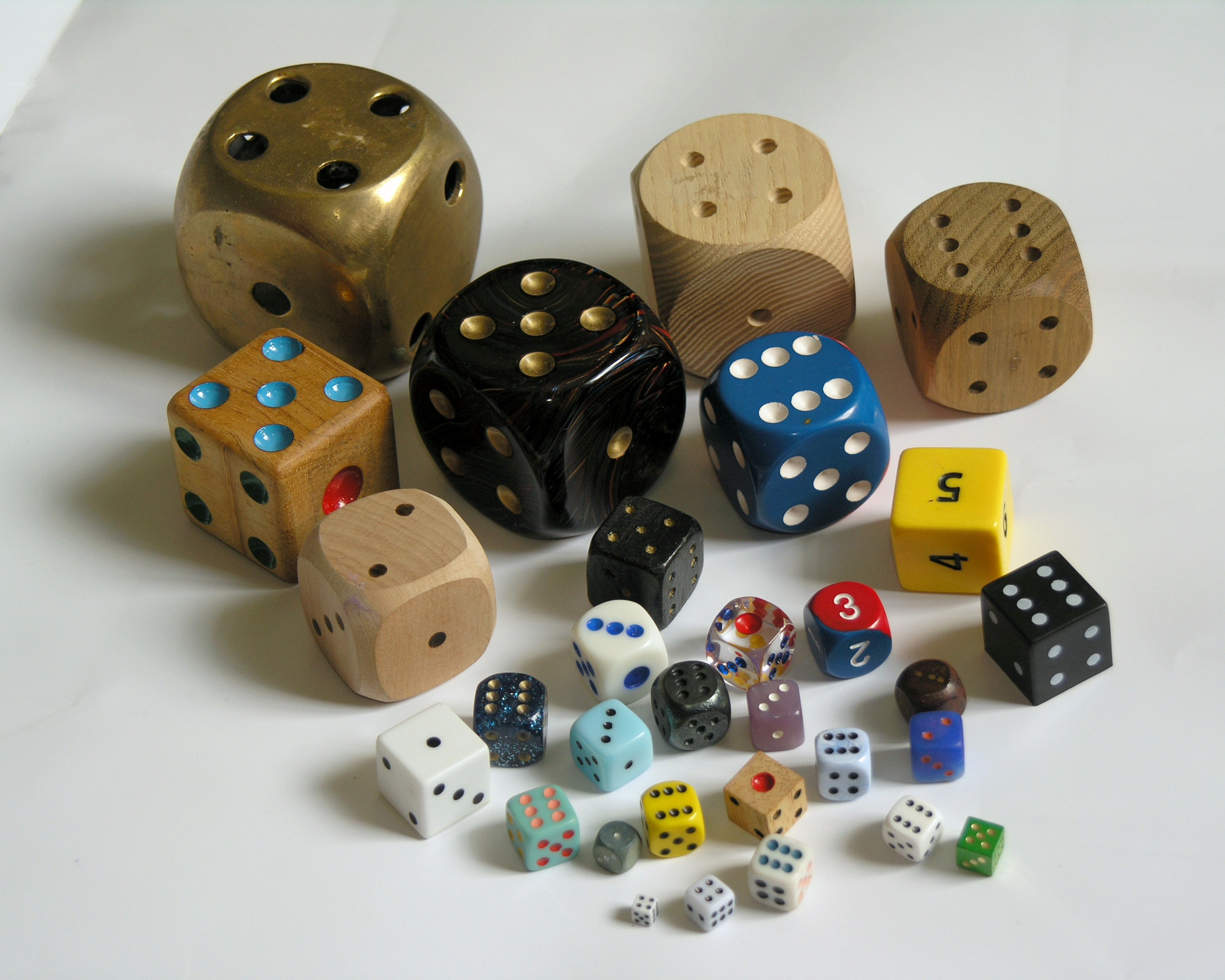
There's no such thing as a bad roll. Every time you throw the dice, no matter what value turns up, that's a good roll.

Common game wisdom is that you don't roll to determine an outcome if you're not ready to accept the result. If something in the game matters to you enough that you're not willing to leave it to random chance, then you don't roll and you handle it in a different way instead. So if you're rolling at all it's because you already decided that whatever outcome you get will be okay. Ideal? No. Exactly what you hoped? No. But it'll be something you can play around and have fun with.

You can't win an RPG. The point of an RPG is to play the game, and the reward for playing is that you get to keep playing and having fun. Every roll you make moves the game along, doesn't matter if it's a success or a failure. Every roll gives you something to react to and continue from, that's the point of the game. No matter what happened as a result of the roll the game goes on and you get to keep playing, so it was a good roll.

Where good or bad comes in is in how you react to rolls. And here good or bad doesn't mean high number-low number/succeed-fail, it means fun or boring.

When you roll, run with it. Whatever the result is, own it and play it out. Either crash headlong into consequences or adapt and find another way to do what you wanted, but play.

If the result's not what you were hoping for stop and think about what's possible instead of immediately going "oh no." Sure you might be disappointed, but don't let that overshadow the reason you're there: To play the game and have fun. The only "oh no" at the table should be an expression of gleeful horror at what's about to happen.

Having only what you want to happen happen isn't the game. If you need that much control over events to enjoy yourself, then maybe playing a collaborative semi-randomized imagination game isn't for you.

Reacting to what does happen in that shared creative space is the game. So accept your good rolls, play, and have fun.


Coins In the Dungeon


As an adventurer you're almost always going to have coins on you. Lots of coins. Whether you just got them from the dungeon you're exploring or brought them in yourself doesn't really matter, they're there.

Most of the time coins are treated as a burden. A valuable burden, but still just a weight to carry around that slows you down, takes up space, and alerts enemies by clinking at inopportune times. It's not entirely wrong. Coins are heavy, they do take effort to haul, and unless you find someone to trade with or bribe in the dungeon they're useless as currency until you bring them up to the surface and into town.

But they're not completely useless.

Treating them only as cargo ignores the fact that coins are physical objects with useful properties beyond their monetary value. (We forget that about real-world money too.) Coins are uniformly-sized and shaped pieces of metal that you can use for all kinds of jobs in the dungeon.

For example, you can take your coins and:

- Throw them down halls and into rooms as a distraction or to check if anything is lurking out of sight. It's the classic 'make a noise that the guards will investigate' ploy and it works. If you make a noise and something reacts, you know to be careful. Throwing coins in an opponent's face is also an effective distraction.

- Throw them ahead of you to check for traps. A single coin might set off a trap with a hair trigger and you can throw a sack full to test heavier weights. It'll also let you test for chemical hazards. If you throw a silver or copper piece in a room and it instantly starts tarnishing/patinating you can tell it's probably not smart to go in (without the right PPE). And if a gold coin starts reacting, then just run.

- Mark your path. Stick them in cracks in the walls, between floor stones, on ledges, anywhere they'll be visible and catch light. It'll give you a trail of reflective blazes that are easier to pick out in torch or lantern light than chalk marks for when you backtrack. Coin trails are good for navigation, temporary in case you want to be stealthy, and if they're gone when you come back at least you know someone's been there.

- Set them out as bait. Wait patiently and find out exactly who's following you.

- Use them as tools. Coins make great improvised screwdrivers, wrenches, and drifts. You can also use them to pry up the edges of stones, grills, grates, decorative facings, access panels, anything you want to break into.

- Use them as shims and jams. You can level or stabilize equipment and items on uneven surfaces by slipping coins under the unsupported parts until it's got a solid base. Tuck a short rolled stack of them into a door's strike box to keep it from latching if it closes. Shove coins into cracks like an old fashioned jammed cam/stop to hold ropes and climbing gear in place. (A bag of coins might actually be better than a traditional block cam because it's flexible but will seize up if you put force on it.)

- Use them as weights. A heavy pile or sack of coins makes an excellent anchor or counterweight, and of course they're good for holding down pressure plates, buttons, triggers, levers, and switches. You can accurately control the amount of weight you use too since coins are small units of mass and similar sizes.

- Test distances. You could drop a coin down a hole and listen for when it hits the bottom, but it's smarter to tie a pouch full to the end of a rope and use it as a plumb. That also works for measuring water depths. A weighted rope is really just a useful thing to have in general.

- Make a weighted rope. Coins on the end of a rope let you accurately throw it across gaps/chasms, up into trees or to ledges/areas above you, over water, wherever you need it to go without having to tie a heavy knot that takes up a portion of the rope's length. And if you tie the coins-on-a-rope to the end of your 10' pole you can swing them and (with some finesse) reach and interact with things outside the normal 10' range.

- Take advantage of their conductivity to close circuits and activate electric or magic-powered devices. Might short-circuit or explode, but it's probably fine.

- Shape them into whatever you need. Gold, silver, and copper are all relatively soft and ductile metals. You can treat coins as boullion/metal stock and cut, grind, hammer, or cast them into simple tools and shapes as needed. It might take a while and it might look rough, but you can do it. And yes, I did say cast. Gold, silver, and copper all have melting points within the range of what a stoked and tended wood fire can produce. (Au 1948F, Ag 1763F, Cu 1984F and a properly handled fire can make ~2000F.) It'd take work and planning to do, but it's possible.

- Roll them and throw them like bricks or use them as brass knuckles. You should be rolling your coins anyway. It makes them compact so they're easier to pack and carry, and keeps them from clinking.

- Use them as ammunition. Slings, slingshots, crossbows, and blunderbusses don't really care what goes in them. Coins are dense. They might tumble in the air, but you can practice and learn to compensate for it.

- Stick them in a sock and hit stuff with it. An improvised cosh is the best kind of cosh and terrible for enemy morale.

In the dungeon everything you have is a tool and everything can be repurposed, even your loot. Especially your loot. Your wealth is worth absolutely nothing if you die in a hole, so don't be too attached to it. Be creative and use everything at your disposal to survive.


Torches vs Lanterns


Light is your most important resource in the dungeon after breathable air. There are lots of light sources you can bring on a delve, but the most common and traditional choices are torches or lanterns. Which has spawned decades of discussion about which is better. This isn't more of that.

Most arguments about light sources focus on efficiency, doing the math about which gives the most light/longest burn time compared to how much space it takes up and weight it adds to your gear.* They focus on packing as light as possible so you have room for the loot you hope to bring back, but prioritizing the space-effectiveness of items over their actual usefulness and applications misses the point of choosing equipment. You pick the things that'll help keep you alive. Sacrificing an inventory slot or two in order to carry more useful gear is a smart choice.**

So instead of choosing between torches or a lantern bring both. Use both. Keep both on hand so you have the flexibility to use each in the situations they're best suited for. It's worth the extra weight to be able to adapt to whatever weird thing you run into.

And once you have them both, be smart about when to use each. Take the time to think about your equipment and how you can use each piece to your advantage. Not only the obvious intended uses, but also the different unintended ways it could help if you improvise. That goes for all equipment, not just light sources.

Here's what I think about when it comes to lanterns and torches. These aren't pros/cons lists, they're just the properties of each item to consider when deciding how to approach a situation.

Lanterns:
- Can be set down, hung, and left unattended without going out. Hands-free.
- Aren't extinguished by wind, random gusts, or rain.
- Have a shielded flame so they won't accidentally set things on fire, but makes it harder to intentionally set things on fire.
- Can be shuttered and concealed easily.
- Fragile(ish). They might work with broken glass, but rely on having an intact fuel tank.
- Can use the fuel for other purposes (as oil, accelerant, solvent, for tick removal, etc) but can accidentally spill it.
- More expensive. They're reusable but cost more to replace.
- Can be disassembled and cannibalized for glass, metal, and wire.

Torches:
- Can't be set down without going out. Need to be put in a sconce, stand, or specifically propped up.
- Put out by air currents and splashes.
- Can't be concealed easily and have to be put out completely to hide.
- Smoky. Makes for bad air quality but the smoke can be used as a tool.
- An unshielded flame. Easy to set things on fire, but it's just as easy to accidentally set your things and self alight too.
- Durable, because it's a stick. Can also be used for stick things and as a source of wood.
- Cheap as hell, utterly disposable. You can throw them ahead of you and drop them down holes without a second thought.
- Floats. Again, stick.

So if you want to sneak around and hide at a moment's notice? Go into rough weather? Use both hands freely? Light up your lantern.

Want to detect air currents? Hit something? Light an area or check for explosive gas without having to go in? Keep your options open for an impromptu arson? Pull out a torch.

Dungeon crawling is basically critical thinking and problem solving as a career, so lean into it. Don't worry about packing efficiently or how much you're carrying, bring the tools that will work best even if they're more expensive (in capacity or money) because they'll help you more than an empty space in your pack.

* If you're curious, here's the light per slot napkin math:
Torches last 1 hour and can be bundled. So at 6 torches/bundle it's 6 hours of light per slot.
Lanterns burn for 6 hours on 1 pint of fuel. A waterskin holds 4 pints of liquid and takes up 1 slot, so that's 24 hours of light. The lantern itself takes up a slot, so it actually works out to 12 hours of light/slot and gets slightly better if you carry more skins of fuel. A jug holds a gallon of liquid (8 pints), so if you use those to store your fuel you can double the waterskin numbers.

** As an adventurer your job is to explore, fight, and get everyone back home safely. If there's loot to carry you can help haul some, but most of the schlepping should be left to hired porters while you focus on keeping everyone safe. If there's enough treasure that your porters can't take it all at once, then don't. Leave some behind and come back later with more porters. It's okay to make two trips.