d100 Dragon Hoards


Dragons have no need for gold and the other shiny baubles valued by the infant, ephemeral civilizations that grow and die around them. They amass vast, exquisitely-curated collections of whatever appeals to them, disdaining any judgment but their own.

1) Uranium glass
2) Teapots
3) Classic cars
4) Flags and banners
5) Stuffed animals
6) Taxidermied animals
7) Cameras
8) Items decorated with the Solo Jazz motif
9) Other people's scrapbooks
10) Vintage computers
11) Radio equipment
12) Remote-controlled vehicles
13) Trading cards
14) Buttons
15) Cardboard standees
16) Quilts
17) Handwoven rugs and carpets
18) Silkworms
19) Tropical fish and coral
20) Vinyl records
21) Scissors
22) Hand tools
23) Stained glass
24) Pillows
25) Dogs
26) Mirrors
27) Clocks and timepieces
28) Cardboard boxes
29) Bubblewrap
30) Marbles
31) Souvenir snowglobes
32) Fridge magnets
33) Collectible lunchboxes
34) Birdfeeders
35) Prisms and suncatchers
36) Art supplies
37) Thimbles
38) Pewter figurines
39) Half-filled diaries
40) Enamel pins
41) Retro videogame consoles
42) Pinball machines
43) Arcade cabinets
44) Eggs
45) Haute couture
46) Bouncy balls
47) Office supplies and stationery
48) Fountain pens
49) Trophies and ribbons
50) Houseplants
51) Boardgames
52) Comic books
53) Seeds
54) Garden gnomes
55) Wind chimes
56) Skeletons
57) Candles
58) Heavy construction equipment
59) Forklifts
60) Jean jackets
61) Blank notebooks
62) Bells
63) Seashells
64) Puzzles
65) Fossils
66) Paperback potboilers
67) Home movies
68) Musical instruments
69) Accordions
70) Novelty telephones
71) Neon signs
72) Stickers
73) Vintage televisions
74) Trampolines
75) Slugs
76) Blacklight posters
77) Circus memorabilia
78) Psychedelics
79) Cool rocks
80) Personal aircraft
81) Maps 
82) Autographs 
83) Secret family recipes
84) Bottles
85) Pinecones
86) Driftwood
87) Graphic tees
88) Kawaii mascot merch
89) Fanfic
90) Gossip
91) Virtual pets
92) Beadwork
93) Lamps
94) Doll houses
95) Weird fiction
96) Withdrawn library books
97) Fancy soaps
98) Hand-knit socks
99) Furniture
100) Postcards and letters from pen pals

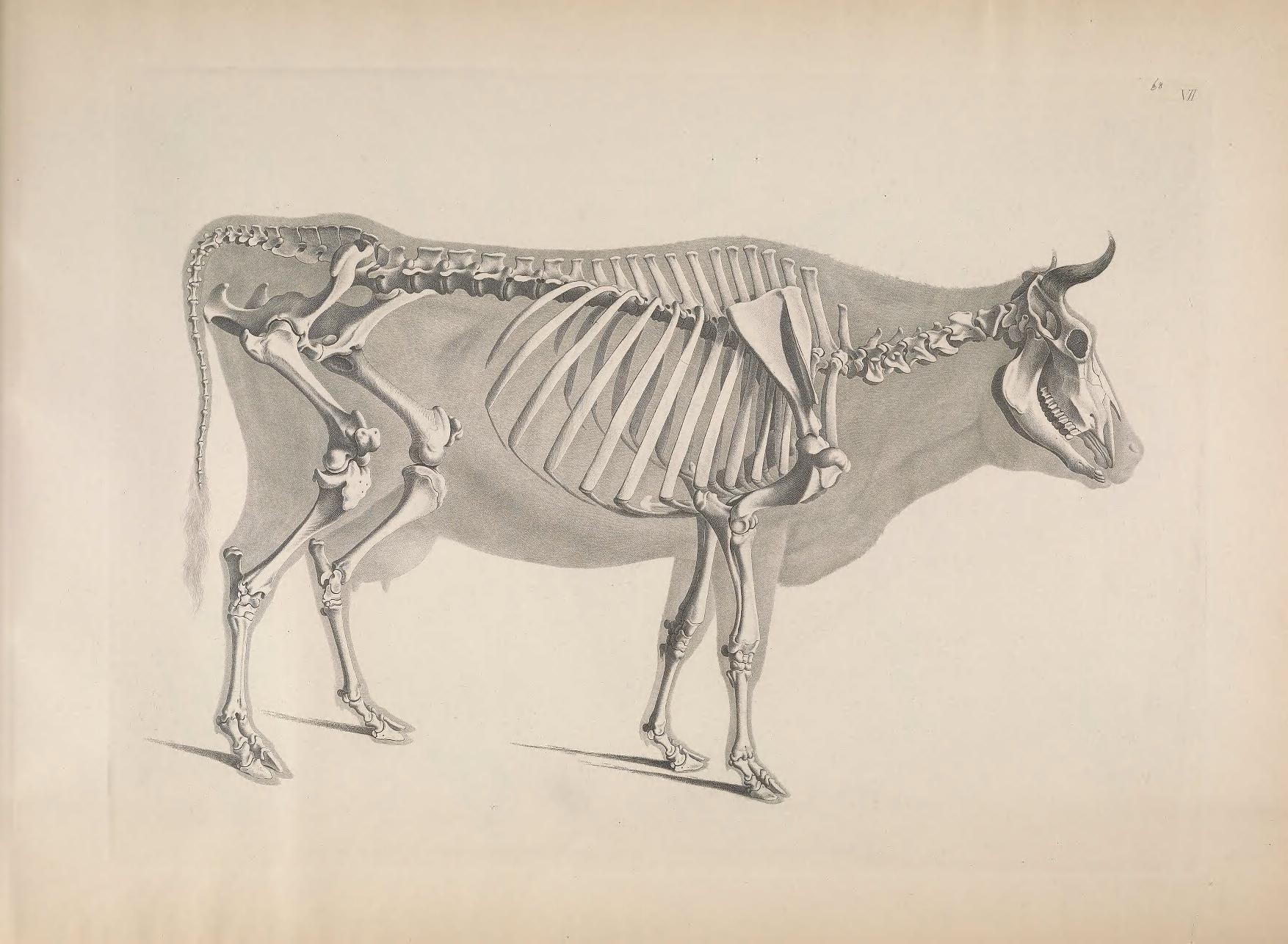
Ghost Livestock

These strange creatures resemble animal skeletons wrapped in hazy, transparent ghost flesh. They're the same as normal livestock in their care and behavior, and are raised for their intensely magical meat and byproducts.

The only difference between ghost livestock and their mundane cousins is in how they reproduce. They don't breed. After being slaughtered the bones must be scoured and sheltered from the sun. If the skeleton is complete, undamaged, and perfectly clean a new ghost animal will rise in three nights. It won't be the same creature as before, though it shares the same skeleton.

No one knows where the come from, only how to care for them.

Thinking About Wards

Warding is one of my favorite types of magic. It's extremely flexible and there are so many flavors that it's easy to work into just about anything. I'm always disappointed when games reduce warding to basic shields and 'protection from'-type spells, or ignore it in favor of flashy destructive magic. Immolating your foes at will isn't always the answer. It's practically boring compared to setting guardian spirits behind you to tear apart your pursuers.

I boiled down the different variations of wards I've seen and came up with six general types that spells tend to resemble. Description and flavor-wise a spell could be anything, but the effects and power sources usually fall into at least one of these main categories:

1) Creates a physical barrier that intruders can't pass. This is stuff like magic circles and boundary stones that exclude or contain entities. Anything trying to get into or escape the warded area runs into a solid wall of force that keeps them from entering or leaving the space.

2) Repels intruders with the sight or physical properties of an object. This is "garlic repels vampires" and "fae can't touch iron"-type stuff. There's not a physical force keeping intruders out, but they're blocked by the properties of whatever's set out along the boundary. It might have an actual effect or the intruder might just believe it does, but it's more applied folklore than magic.

3) Repels intruders by invoking a Power to protect the space. This is when the warded area is guarded by a god or guardian spirit that the caster has politely asked to help. Anything that tries to get in either can't, gets thrown out, or has to fight the guardian entity. The key thing is that the guardian is helping because of an entreaty from the caster, not compulsion.

4) Tethers a force to guard a space. This is stuff like the spirits of ancient warriors bound to statues in a tomb to guard it forever. It's the same as 3, except the guardian(s) is there and acting the way they are because of a compulsion from the ward's magic.

5) Makes an area actively hostile to intruders. Things like holy ground or threshold magic, where an intruder either can't enter at all without an invitation or are severely weakened while inside the bounds of the ward. May also burst into flames.

6) Acts as an alarm. Intruders can pass across freely, but it pings the caster or otherwise records their presence. Sometimes acts as a trigger for other spells.

That's it. There are your archetypes. You can break down most types of protective magic and they'll fit into one or more of them. Try it out.

I also thought about why warding regularly gets downplayed or entirely overlooked in games and settled on two main reasons:

First, cowardice. Like I said before, warding is extremely flexible. Your options for using it change with each new space you visit. Codifying how the magic could potentially interact with different architectural elements vs things inside rooms vs open space in a way that produces satisfying rules would be an effort. So designers don't and we end up with boring and generic protection spells. Cowardice. There's no need for that level of exactness and specificity in rules, just give the players things and trust them to have fun.

Second, flavor. Warding is usually complex, static magic with (by definition) sharply marked boundaries. Making wards takes careful planning, time, and precise spellwork because they're supposed to be major enduring pieces of protection. It gives you things like castle cities where the wards have been active for centuries, family homesteads protected over generations, and magic barriers in the far-off wilderness that have barred monsters since before living memory.

It's good stuff and works great for locations the players might visit, but not so well for the players themselves while they're on the road adventuring. Any wards players might use in the field would have to be made fast. Improvised work cobbled together from whatever was lying around or in their pockets. Protections that would serve to secure a campsite for a few days or seal an area of the dungeon so nothing can sneak up on them, but that wouldn't last long after the party leaves.

In that spirit, here are some ephemeral wards made from basic supplies that can be easily carted around and deployed as needed.


1d12 Ephemeral Wards
1) Water from a holy lake or well. Works until it evaporates.
2) Blessed bones. Animal? Human? Something else? Yes! Each have a spirit bound to it that awakens and attacks when an intruder comes within range.
3) A stone. Seal evil entities by way of plonking a big rock on them.
4) Teeth. Summons a ghostly maw to devour unwelcome visitors.
5) Smoke. Creates solid walls of haze between fires burning at the edges of the safe zone.
6) Carved pebbles. Put them in conspicuous places around the area, the sigils on them repel interlopers.
7) A design of footprints pressed into the dirt by dance. Creates a palisade of invisible spikes from each print.
8) Sootblack collected from a sacred fire. A figure made of greasy lampblack tirelessly pursues anyone who crosses the ward's perimeter.
9) Fallen leaves arranged in careful patterns and drifts. Forcefully imparts the idea of gravity to pin anyone who enters the space uninvited.
10) Chunks of empty honeycomb. Houses a swarm of spectral bees. If anything passes by they fly to warn the caster with a waggle dance.
11) Holy texts. Stack them like bricks into a solid wall that'll seal doors and portals.
12) Braided cord made of hair. Delicate and so fine it's almost invisible. If anything breaks it, it starts screaming and won't stop.


(If you'd like more stuff in this vein, Luke Gearing's created a magnificent batch of wards that I absolutely love.)


Tiny Coffins Challenge: June

 Welcome back! This month's prompt is:

"the first signs of your efforts coming to fruition"

I grow morning glories every year. I've grown the same seedline for almost a decade now, collecting seeds to plant again each spring. The plants I have now are exceptionally hardy because I'm a neglectful gardener. Only the ones who can withstand regular droughts and bad soil make it to flower. I still worry though, mostly about the newly-sprouted seedlings. Will they survive frosts? Is their soil draining properly so their roots don't rot? Do they actually need fertilizer this year? It's not until about June when the vines have climbed onto the trellis and started flowering that I can be sure something won't go terribly wrong.

1d20 Ways to get the demon's attention


1 Call their name three times

2 Say their name

3 Think their name

4 Look in a mirror, any mirror

5 Compliment them out loud

6 Insult them out loud

7 Go on down to the crossroads and make your presence known

8 Talk to the doll they gave you

9 Write your request on an offering and burn it

10 Submit a request for audience in triplicate via courier imp

11 Turn around

12 Close your eyes

13 Go to sleep

14 Pour a drink

15 Put out a plate of cookies

16 Call them up, they've got a cellphone

17 They prefer texts

18 Email works best

19 Just talk to them, they're accompanying you on your journey

20 No need, they're always watching

Message for you

Message is a classic spell, one of the oldest and most useful out there. Here are some variations on it for when you want to play with magical telephony.


Black Fax
Duration:  3*[caster's level] minutes
Components: Your best imitation of a dial tone

Instead of conveying information this spell fills the target's head with darkness and static. Thought and movement is impossible for the duration of the spell while they receive the warped message. When it ends the target knows exactly who cast the spell. The target can't respond to anything happening around them, but can choose to make an INT or WIS save. On a success the spell only lasts half its normal duration, on a fail the duration doubles.


Spam
Components: A list of strangers' names and a shard of your soul

Sends an identical message to every intelligent creature within 1000'. They can't respond or tell who sent it. The spam message preempts or interrupts any other communication a target might receive. Spam can be cast as a cantrip to send 1 message, or with a spell slot to send [spell level] messages in sequence.

The message's subject is:

  1. Advertisements
  2. Unsound medical advice
  3. Sketchy pharmaceuticals 
  4. Celebrity gossip
  5. Risky financial advice
  6. Thinly-veiled wire fraud
  7. Opinion poll
  8. Gambling
  9. Religious screed
  10. Vampire transformation testimonials


Party Wire
Components: 1 SP

Sends the same message to up to 10 targets the caster chooses. Each recipient can respond, but their return messages will get garbled if they try to reply at the same time and talk over each other. After the caster sends their message and hears all the responses roll even or odd. On even only the chosen targets got the message. Odd, the caster accidentally connected another person into the spell and they heard everything. GM decides who the extra person is.


Landline
Duration: Up to 10 minutes
Components: A little bit of your dignity

Lay face-down on the ground with your forehead pressed into bare soil. While in that position you can speak to 1 target and carry on a normal two-way conversation with them no matter where they are as long as their feet are touching the ground.

Tiny Coffins Challenge: May

 Welcome back! This month's prompt is:

"winding trails, disorientation, and the scent of flowers"

Getting lost in the woods is a peculiar feeling. It quietly picks at something superstitious in the back of your head. The absence of people, places, even background noise you could use to orient yourself gets to you in a way that just 'not knowing where you are' doesn't match. It's easy to get turned around, even when you're on a trail, and if you can't find a blaze or marker to get your bearings you have to look for landmarks. A distinctive tree, a big rock you passed, the sound of a stream, anything that might cement where you are. I used to use the smell of honeysuckle. Most of the parks around here have their parking lots and trail heads in meadow areas where they grow; so smelling honeysuckle meant I was on the path back to the car.

How are the guards tonight?


Unless you invested in perimeter golems, guards are people. They have off days, get distracted, and are people. It's unlikely that every guard you meet will be completely on top of things all the time, so roll for their mood when you come up to a guard post. This doesn't replace a reaction roll.


The guards are... (1d8)

  1. Attentive - On guard, doing a good job
  2. Nervous - On guard, overly attentive and jumpy
  3. Distracted - Focused elsewhere (weird noise, disturbing thoughts, personal problems, daydreaming)
  4. Bored - Inattentive, lost in thought, maybe dozing
  5. Grumbling - "Why are we even out here?"
  6. Asleep - Physically there but unconscious
  7. Patrolling - Roll again and they're mobile
  8. Missing

Tiny Coffins Challenge: April

 Welcome back! This month's prompt is:

"waking, hunger, and iron determination"

Early spring is a hard time in nature. The hopeful associations with renewal are something that we attached to the season. Yes, the snow's melting and it's warming up, but there's not much food yet. The winter forage is mostly gone, new plants haven't grown in yet, and most of the small prey is still dormant. The creatures that are active are running on the fumes of their winter stores and have to hold out until there's something to eat. One of the few things that thrives is skunk cabbage. It generates its own heat to melt through the snow and start growing weeks before other plants even sprout. It can survive frosts and drinks in the weak sun like nothing's wrong. The sheer moxie of this plant is breathtaking.

Spell Reeds


Magic is inimical to human life. It consumes the unwary and eventually burns out even the most judicious mage. If overused or worked without proper shielding raw magic will taint its surroundings, rendering the land toxic and unusable for generations. There are several species of plant known to withstand the noxious effects of magic-poisoned soil. Some, such as common spell reed (Phragmites incantus), even thrive and can be employed to reclaim land in the wake of magical disasters or pollution from long-term arcane discharge.

Spell reed is a hyperaccumulator that, when planted in tainted soil, absorbs and condenses any magical residue present. Research shows they are effective in mitigating all forms of arcane phenomena, including even well-contained spellwork such as ancestral curses or enchantments that some may consider beneficial. The condensed mystic power is sequestered within the plant's tissues and may be harvested for proper containment and disposal. As with any such project, the speed at which territory can be rendered safe for habitation varies depending on the severity of the contamination and the number of reeds planted. If following best practices, it is usually possible to reclaim up to an acre of land within 1 to 2 months, though heavily tainted soil may require years of effort.

It is possible to use specially processed spell reed in crafting magical objects or to augment spellwork, but such practices are dangerous and release the concentrated magical energy stored inside the plant. As such, they negate the environmental benefits of cultivating spell reed and are not advised.

-------------------------

Spell reeds:

  • Absorb and condense the latent magic in the soil they're planted in.
  • Process absorbed magic into pure arcane power regardless of what the original flavor was. (Ex: necromantic, illusion, transmutation, etc.)
  • Take 1 to 2 months to grow to maturity and be ready to harvest. (1d30+30 days)
  • Will absorb any magic. Can be used to break enchantments and curses on land. Takes 1 crop of 1000 reeds per level of the spell being broken. (Ex: a 7th level spell can be broken in 1 to 2 months by raising a crop of 7000 reeds, and be broken in 7 to 14 months by raising 7 crops of 1000 reeds)


The refined ashes can be:

  • Used as a power source when enchanting normal items or crafting magical ones. Cut crafting time by 1/2 for every 100 reeds worth of ashes used. (200 reeds cuts time to 1/4, 300 reeds cuts to 1/8, etc.)
  • Ingested, usually as a pill or snorted, to restore expended spells once per day. (Requires 25 reeds worth of ash/level)

Ash abuse is dangerous. If you consume ash more than once a day, for each extra use roll over 50+(# of extra uses * 10) on a d%. On a fail cast fireball on yourself as the stored magical energy breaks free.


If planted in a dead wizard's skull or brain, it will absorb the spells they had memorized at the moment of their death.

  • Slit the harvested reed open, press it flat, and dry it to make a papyrus-like strip with the spell encoded in the ridges of pith. It can be used like a scroll but not copied.
  • Burn the dried reed and consume the ashes to gain the spell directly. It can be copied into a spellbook, but has a 30% chance of being involuntarily cast immediately.


Tiny Coffins Challenge: March

This month's prompt is:

"volatility, predictions, and the slow grind of change"

March might technically be spring, but around here it's still very much winter. The snow's only barely begun to melt, the weather changes by the hour, and the days aren't getting noticeably longer yet. It can be demoralizing, even when you know the season is turning and you just need to be patient. The best sign of change is the birds. When the robins start building nests and the goldfinches turn yellow again you know spring is actually on the way.


d10 Unsettling Natural Phenomena


1 Moss Mist - Opaque green fog banks that carry microscopic fibers and spores of moss in their droplets. Occurs regularly in the spring when the bankmoss reproduces. Homes near where it grows are protected with airtight seals and fine filter meshes. It's safe to go out in it as long as you wear a properly-fitted filter mask, but DO NOT BREATHE IT.

2 Talking Storms - Occur in high winds near certain honeycombed and eroded sandstone canyons. The wind running over and through the rock cavities doesn't just sound like voices, it produces actual human speech. The words are distinct and range anywhere from beautiful choral concerts to horrible things whispered directly into your ears.

3 Inky Rain - These organic deluges happen in late spring when driftcap mushrooms sprout. These inkycap relatives grow lighter-than-air fruiting bodies that break free from their stalks and float on the wind in clouds of thousands. They begin to melt within hours of takeoff, dropping inches of self-digesting spore-bearing black fluid as they go.

4 Giant Lamprey Migration - In mid-autumn the lamprey swim inland from the ocean to spawn, choking waterways of all sizes with their 12'-long squirming grey-white bodies. They're delicious if you can catch one, but DO NOT GO IN THE WATER.

5 Mirror Sky - Occur on warm days over low rolling hills and plains. The still air creates a mirage of the ground below, a perfect reflection complete with exact copies of all the local places and people. If you look straight up, you can see yourself staring back. It feels as if there's a second planet hanging directly overhead, even if you know what's going on.

6 Night Tide - Schools of impenetrably black microscopic diatoms that drink in all light, casting the areas around them into constant night. The schools can be miles wide and come into the shallow waters in high summer, blanketing swathes of coastline in darkness. A tide usually lasts for about a week before the school disperses. The longest on record lasted almost five months.

7 Companion Halos - On cloudy days distinct rings of indigo-violet light form in the sky directly over thinking creatures. Each individual attracts a single halo that follows them perfectly, staying exactly overhead and visible for miles. The halos' size and intensity occasionally change, no one knows why.

8 Sibling Suns - Instead of setting the sun diffracts into many much smaller suns, each a different color. Together they shine their single-hued lights in overlapping cones, casting bizarre vibrant shadows and filtering the world into zones of monochrome. Events occur more frequently the farther north or south you go.

9 Return Frost - In late autumn before the ground freezes extreme overnight cold snaps cause frost heaving so intense it churns the soil and unearths recently-buried corpses. Morning finds the land encrusted in feathery rime and the exhumed bodies impaled on thousands of needle-fine shafts of ice. Areas with frequent return frosts usually create the dead, so bodies found after a frost are deeply suspect.

10 Coffin Rain - Torrential freezing rains that occur in high winter. The water falls and freezes fast enough to trap anything caught outside in a shell of ice a few inches to feet thick. Seek shelter immediately! Buildings in areas that experience regular coffin rains have extremely wide eaves that curve downwards to protect exterior walls from ice buildup.

Fire Tyrant

A massive salamander with the ability to control fire. These intelligent creatures cause chaos by entering a settlement, extinguishing all fires, and refusing to allow new fires to kindle until their demands are met.

Their demands are often strange and inscrutable, running the gamut from strenuous quests (like retrieving a rare food or treasure) to simple favors (like giving a good back scratch).

Aside from their ability to shut down all civilization in a 50 mile radius, Fire Tyrants are usually nonviolent and willing to negotiate, but they're stubborn.

HP: 12d12+12    AC: 19

Resistance: Magic, acid, poison, cold, physical weapons

Immune: Fire


Extinguish - Magically douses as many fires within a 50 mile radius as it wishes. Fires can't be relit without its permission. Affects magical fires.

Flare - Reignites as many fires as it wishes within a 50 mile radius. They suddenly explode causing damage as a fireball spell.

Gentle Smile - Just a big old goofy salamander smile. Gives +7 to its CHA and CHA-based skill checks. Any character with proficiency in Animal Handling who sees the smile must pass a DC 14 WIS save or fall under a Charm Person spell.